Nile Nav - Deployment Guide
Introduction:
Nile Nav is our next-generation mobile app and is part of Nile’s AI suite of applications. Nav combines Nile Service Cloud features with machine learning to deliver world-class field service operations. It provides real-time observability and continuous optimization for Nile Service Block components, streamlining network deployment through simple, intuitive interfaces. The Nile Nav Mobile App is available for iOS (version 13.0 or later) and Android (version 11.0 or later) devices. Nav supports Nile Cloud authentication as well as SSO through Okta, Azure AD, and G Suite. The app is accessible by authenticated and authorized users who have been assigned Nile Access Service installation jobs.
Nile Nav offers several features, but here are a few key ones:
- Site readiness checklist for each location
- Built-in training and troubleshooting resources
- Guided workflows for device rack & stack and cabling
- Automated service activation
- Real-time job progress monitoring
- AI-powered checks for deployment deviations
- Automated validation post-deployment
- Post-deployment visibility
- Hardware replacement workflows
- Decommission processes app
Step 1: Download and log into the Nile Nav Mobile App
- Go to your app store and download the app – Nile Nav
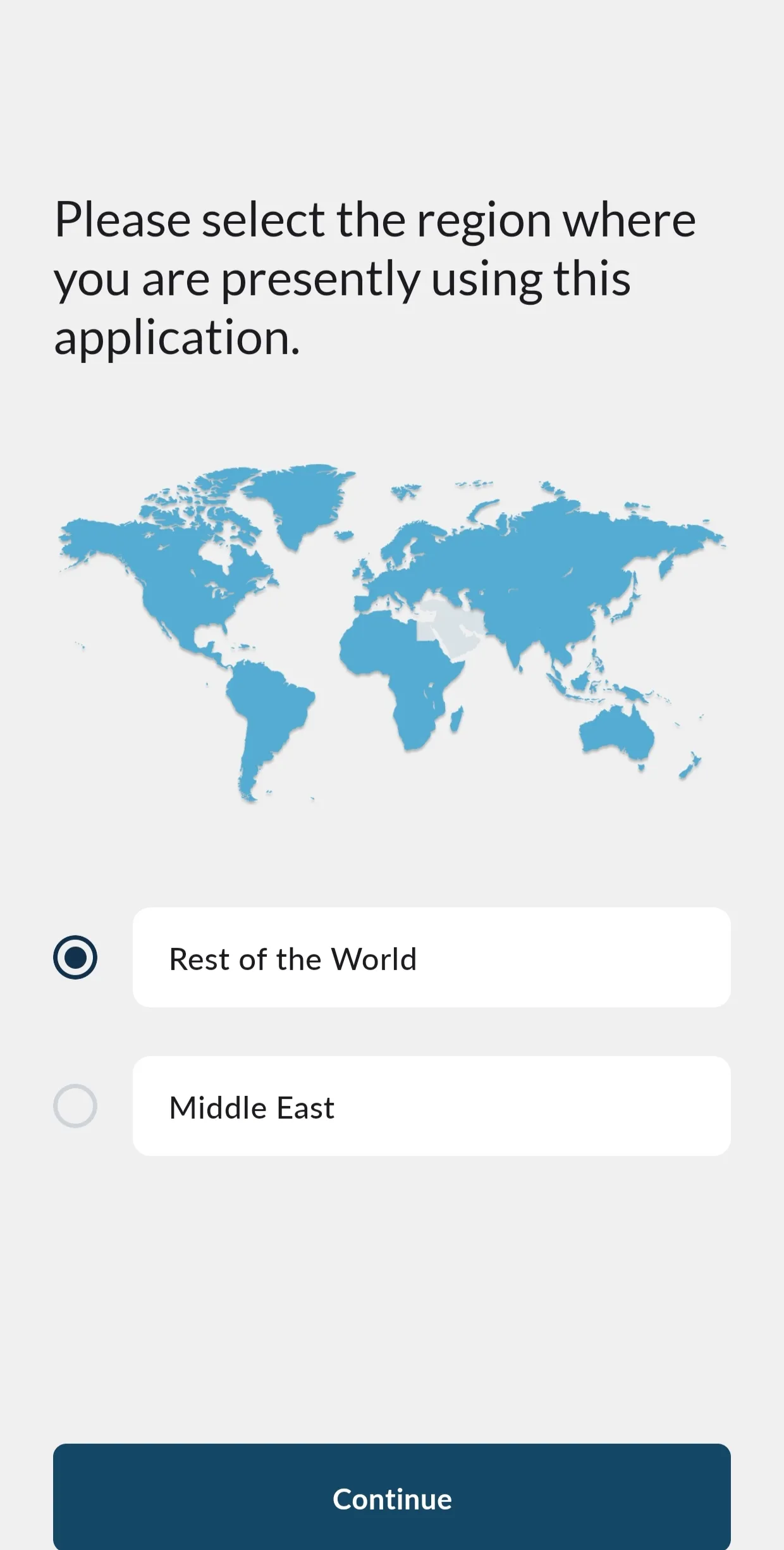
- Open the Nile Nav app and it prompts for the region where you are using this app. Choose the desired option "Rest of the World" or "Middle East".
-
- Click "Login" on the next page. Please use the credentials that you have set up when you receive an email from Okta. If you have not received the invite email, please contact your Nile Service Delivery Manager or Admin.
Step 2: Installation job workflow.
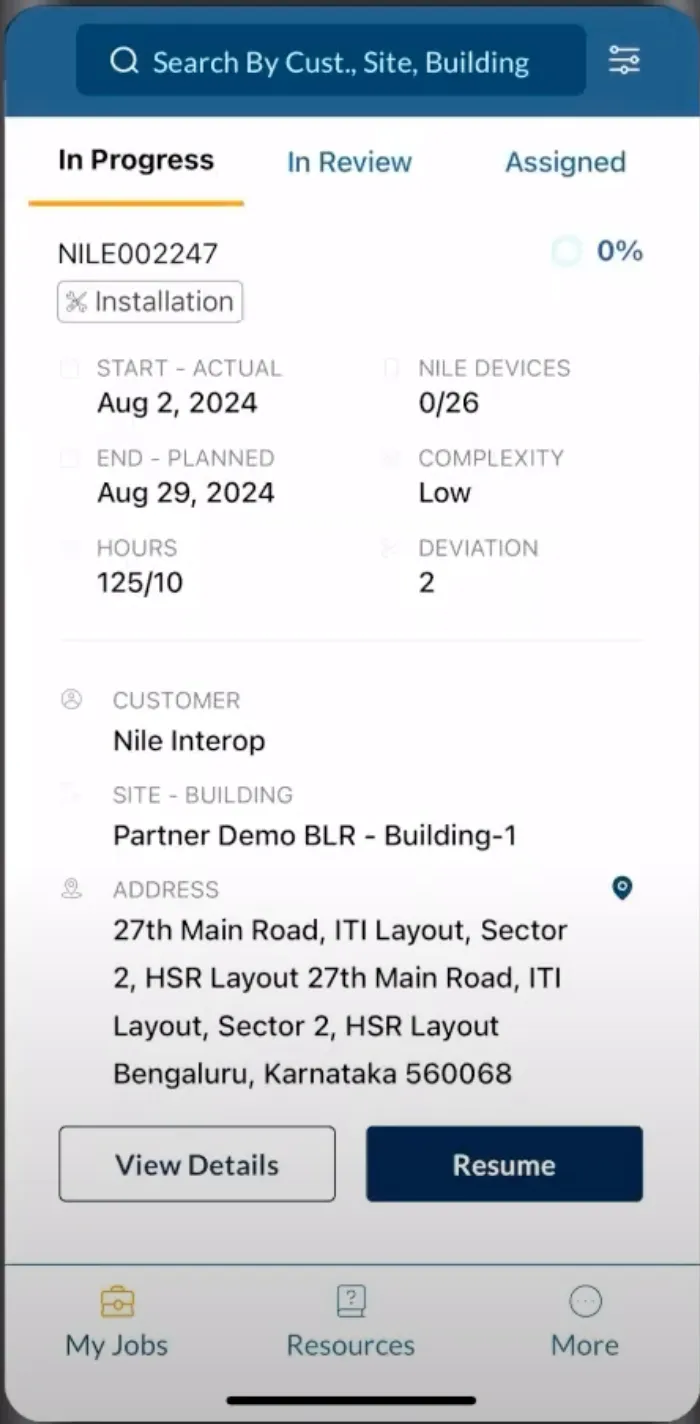
After logging into the Nile Nav app, the installer will see the current status of installation jobs displayed below.
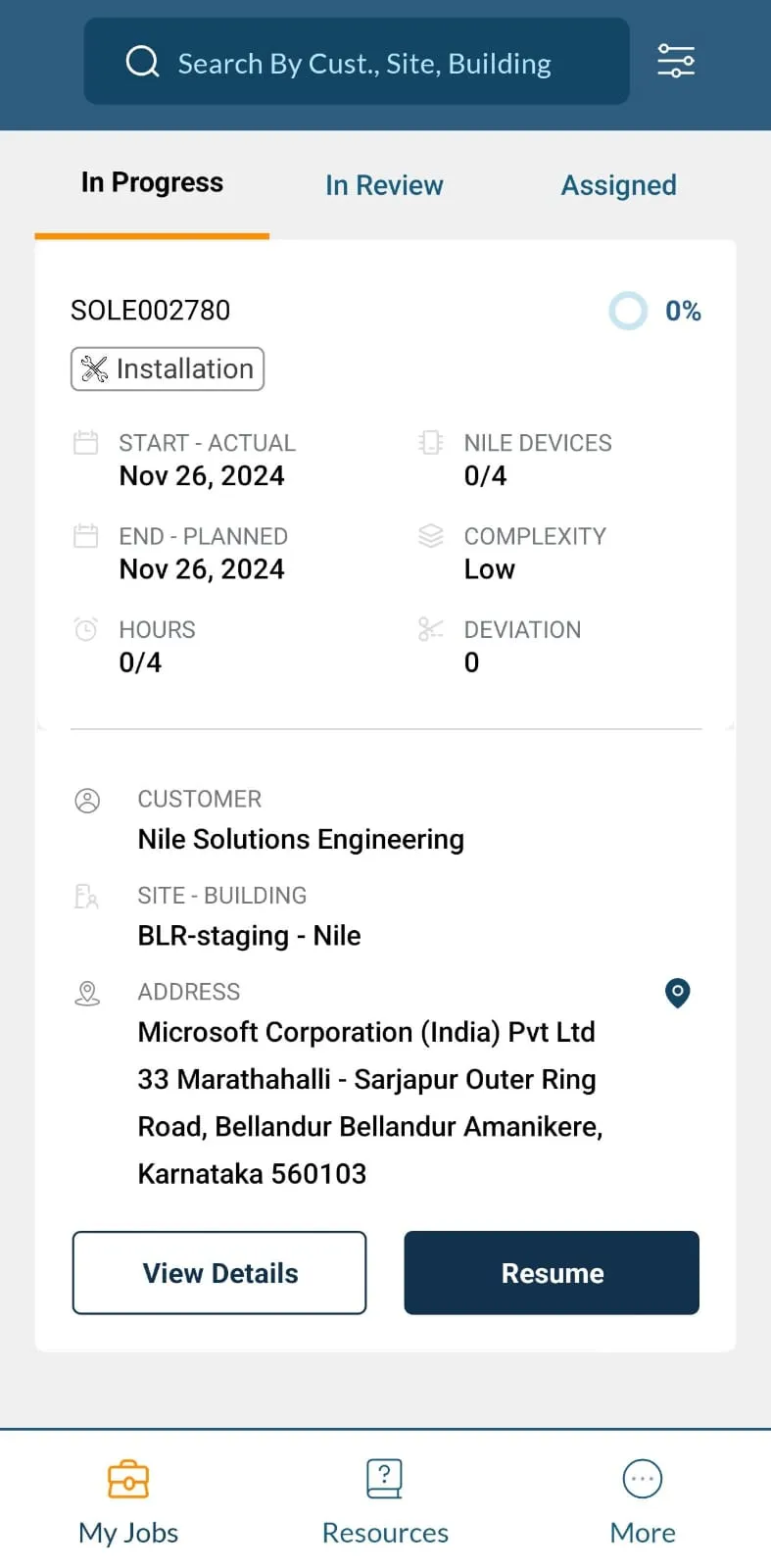
- The installer should verify the Customer details and site Building address.
- Click "View details" to see the overall progress of the installation of each Nile device.
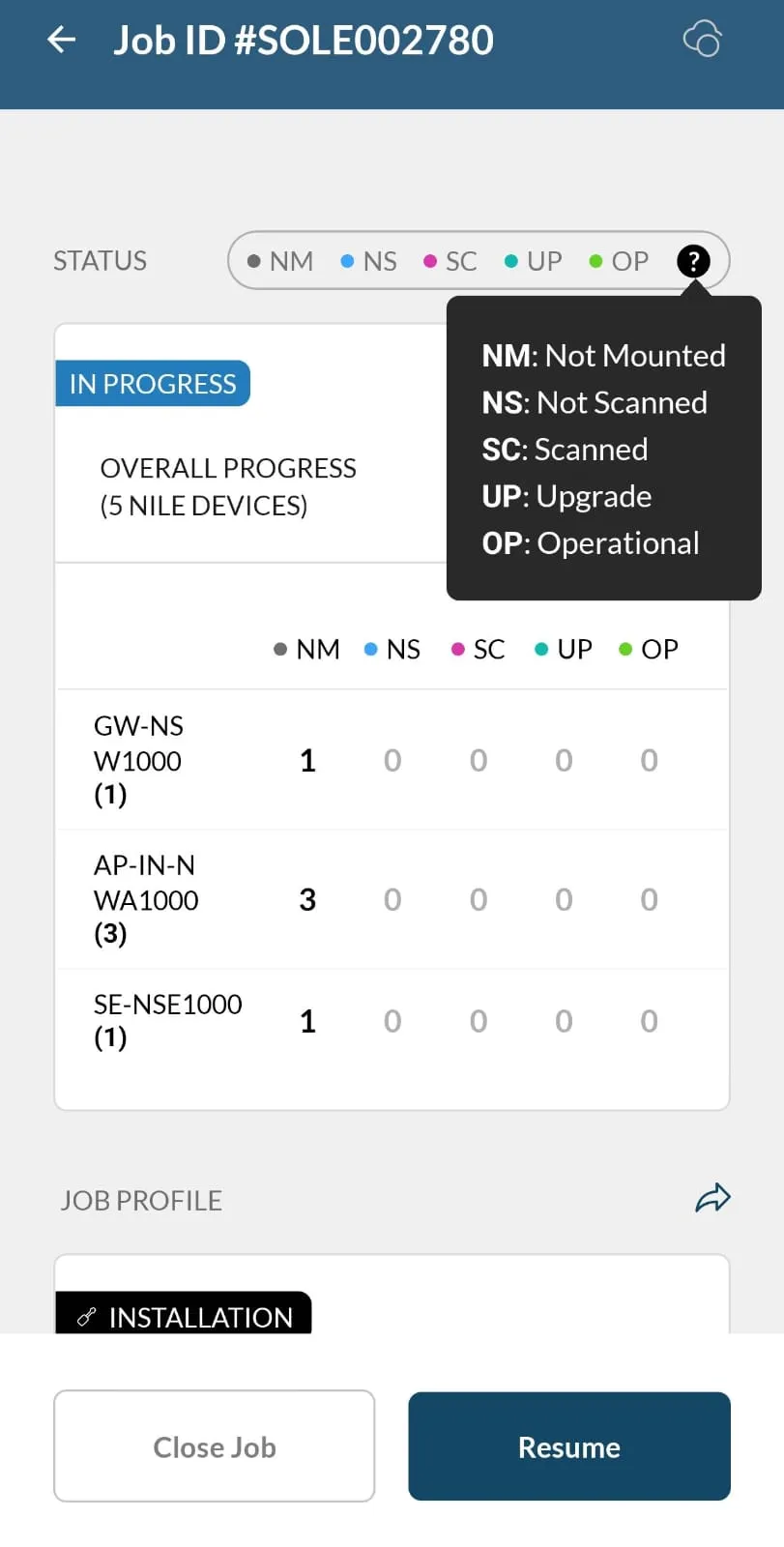
- Click "Resume" to view the tasks.
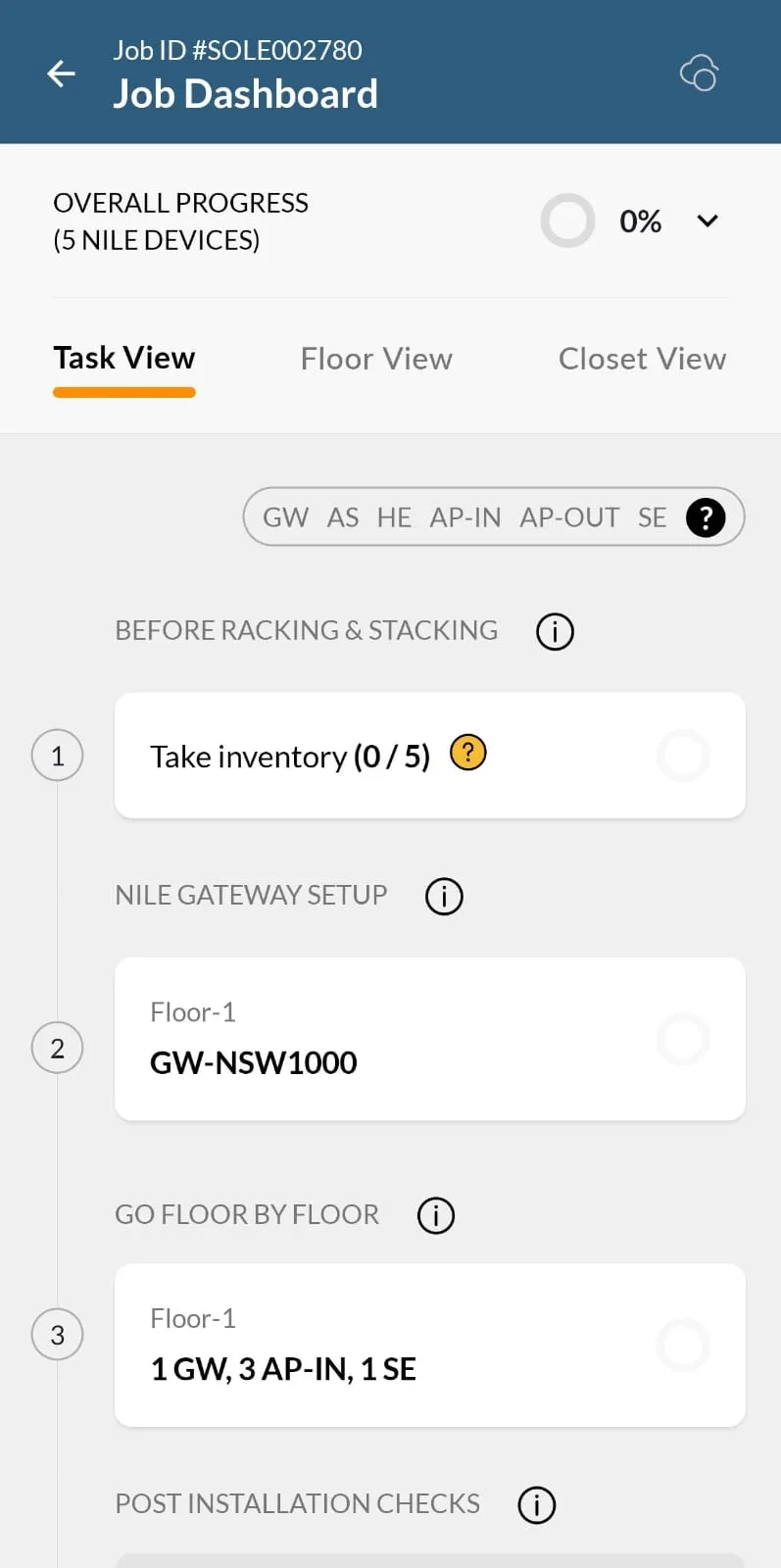
- The installer should verify the inventory before Racking and Stacking.
- "Take inventory" provides a complete list of Nile devices and components. Note: This inventory may be linked to other jobs at the same site, sharing counts across jobs. Scanning a device syncs the inventory among linked jobs.
-
Step 3: Guidelines before activation.
- The app provides the guidelines below before activating Nile devices. a. Unboxing b. Rail Installation c. Insert the devices into the rack d. Interconnection e. Activation
- The installer can skip the videos if already aware of these steps.
Unboxing
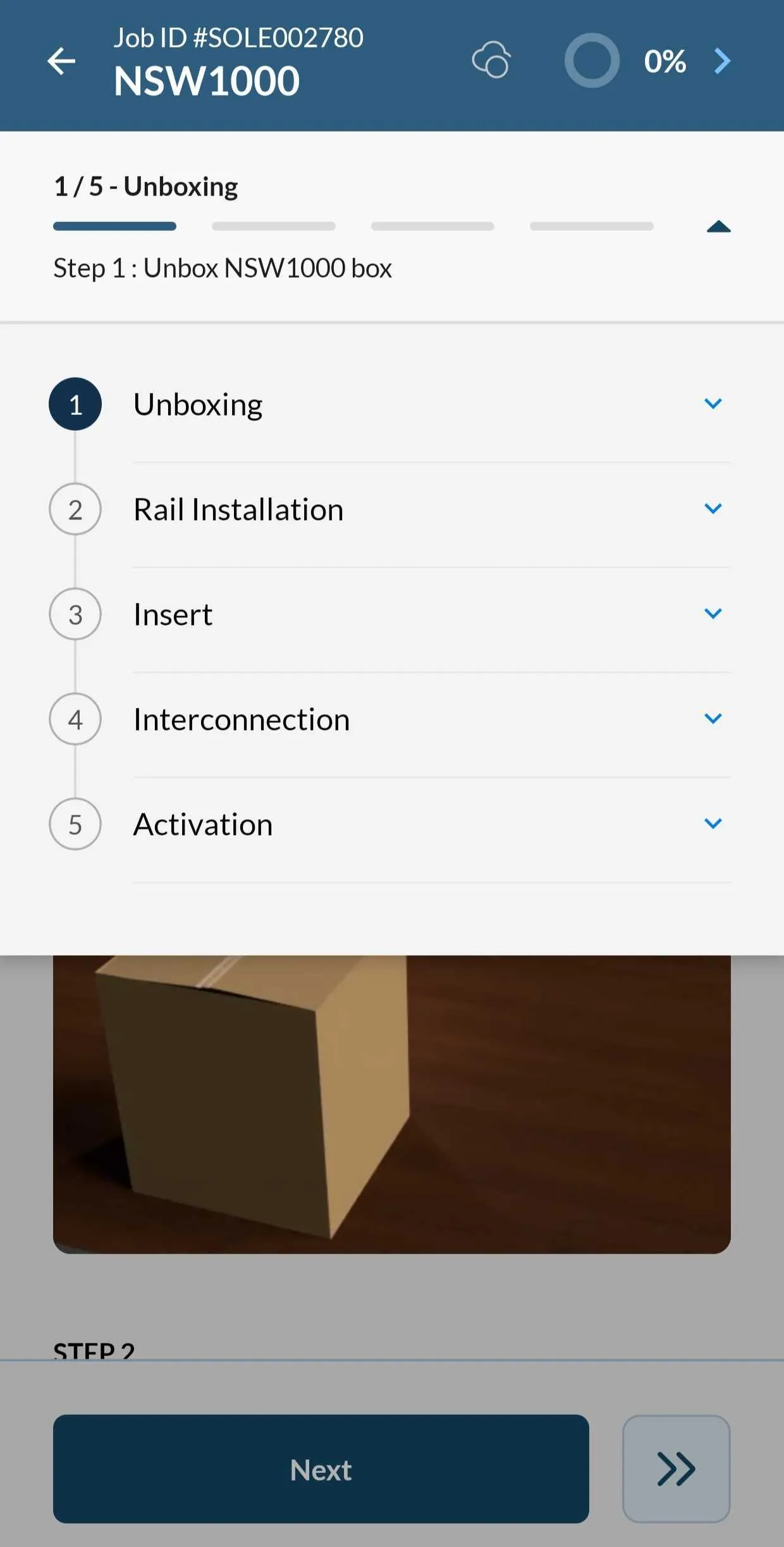
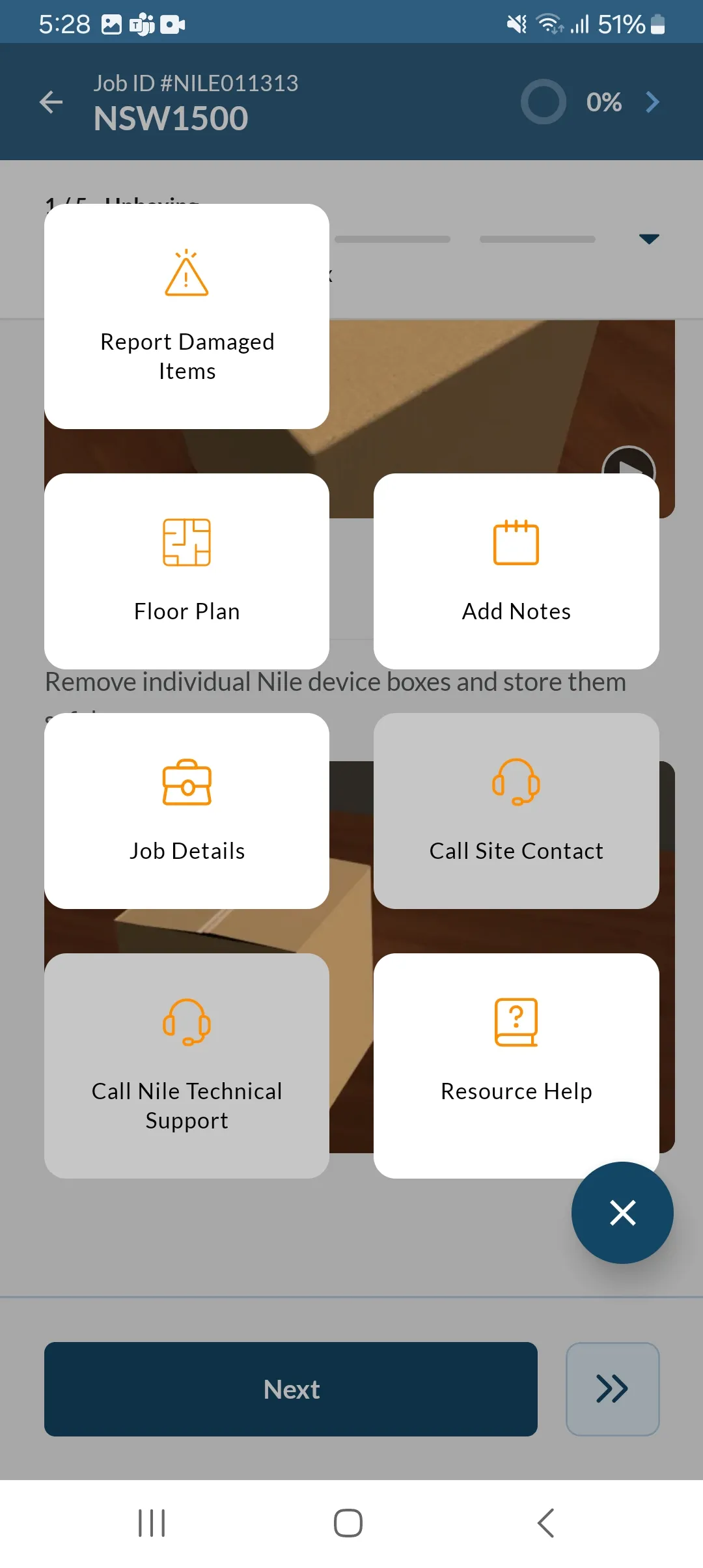
- If device issues arise, the installer can click the Options icon to report damaged items, access resource help, or add notes.
Rail installation
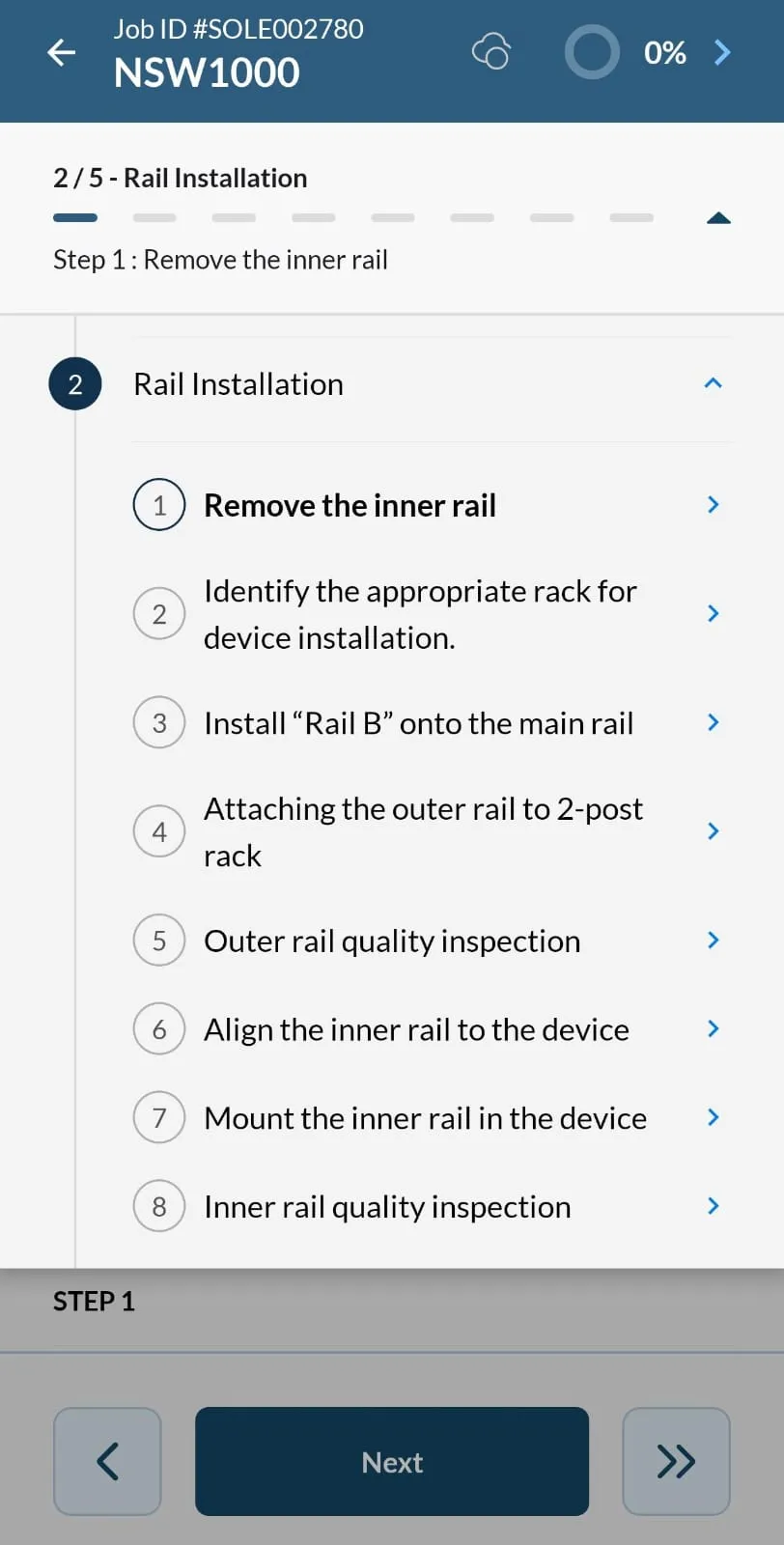
- To mount the rails into the rack, begin by expanding the railing to its full capacity. i.e. Full length.
- Verify the L and R sides, Identify the type of rack & RU# for installation, and snap the rails into place.
Insert the device
Before inserting the device, take a picture of the rack and upload it for documentation and reference.
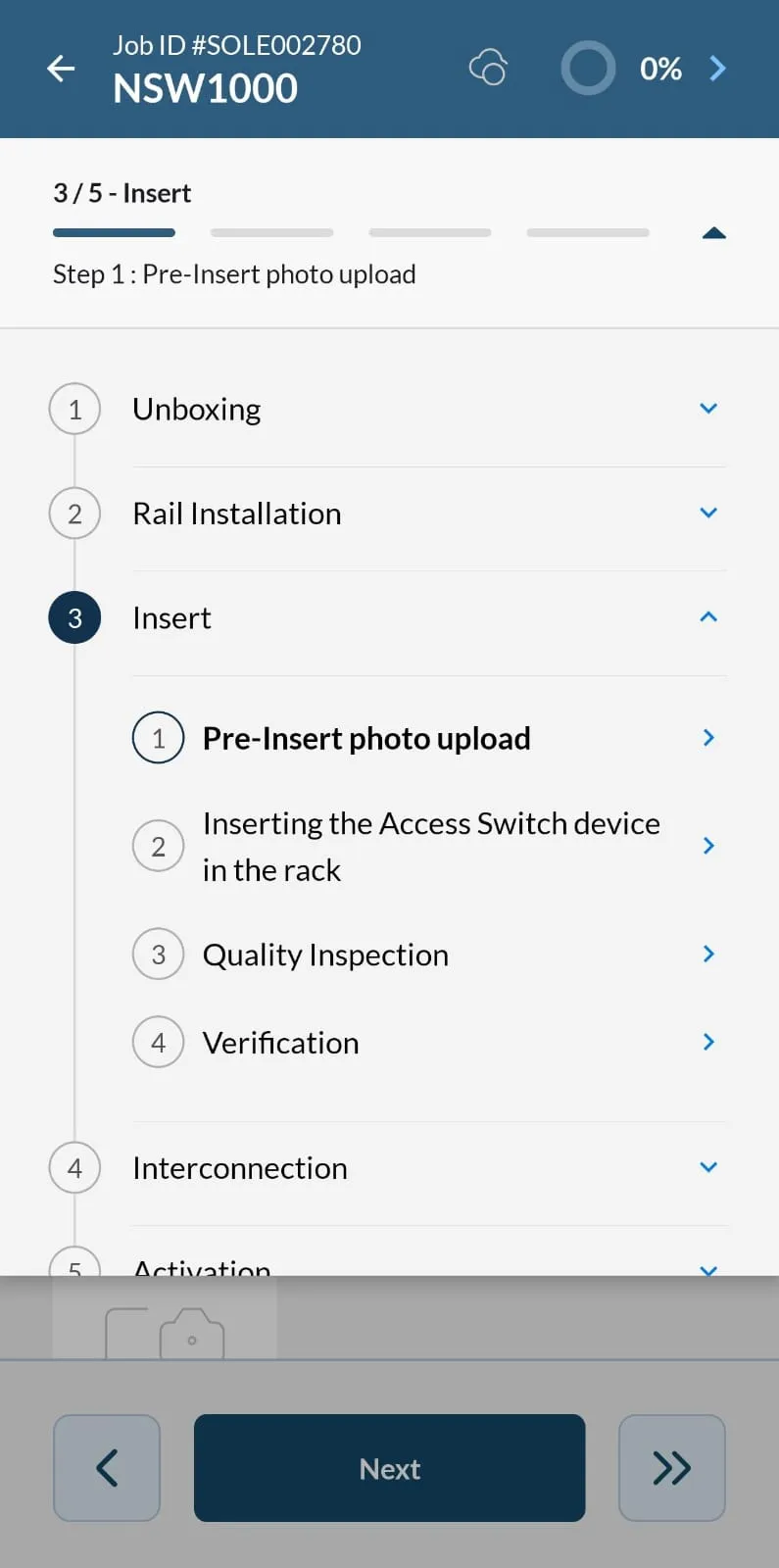
- Mounting the Nile devices on a 2-post Rack
- Mounting the Nile devices on a 4-post Rack
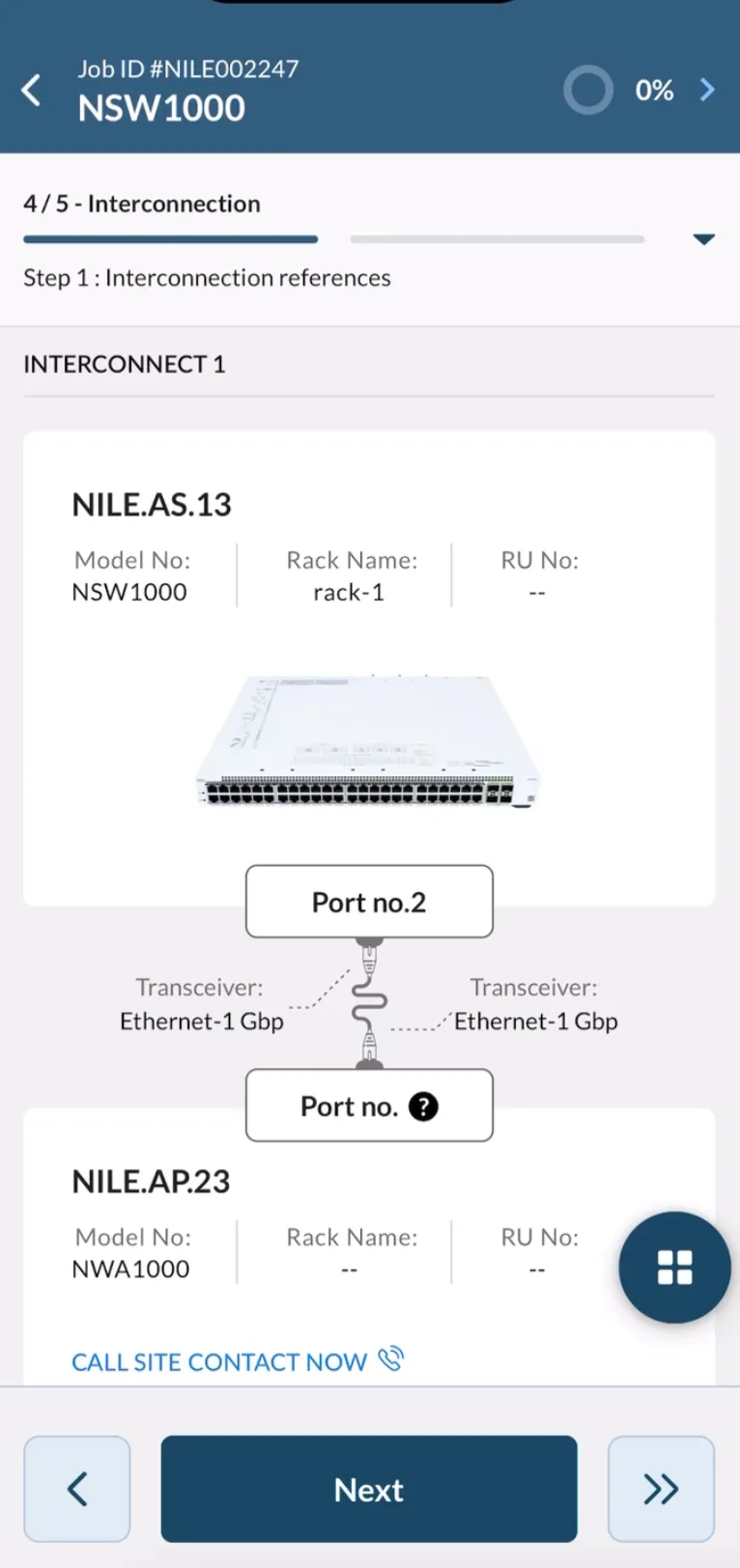
Interconnection
- Describes the steps on how to interconnect multiple devices that are installed in the rack which includes the device name, rack name, and the specific port for interconnection.
-
Activation
The activation process consists of the following steps:
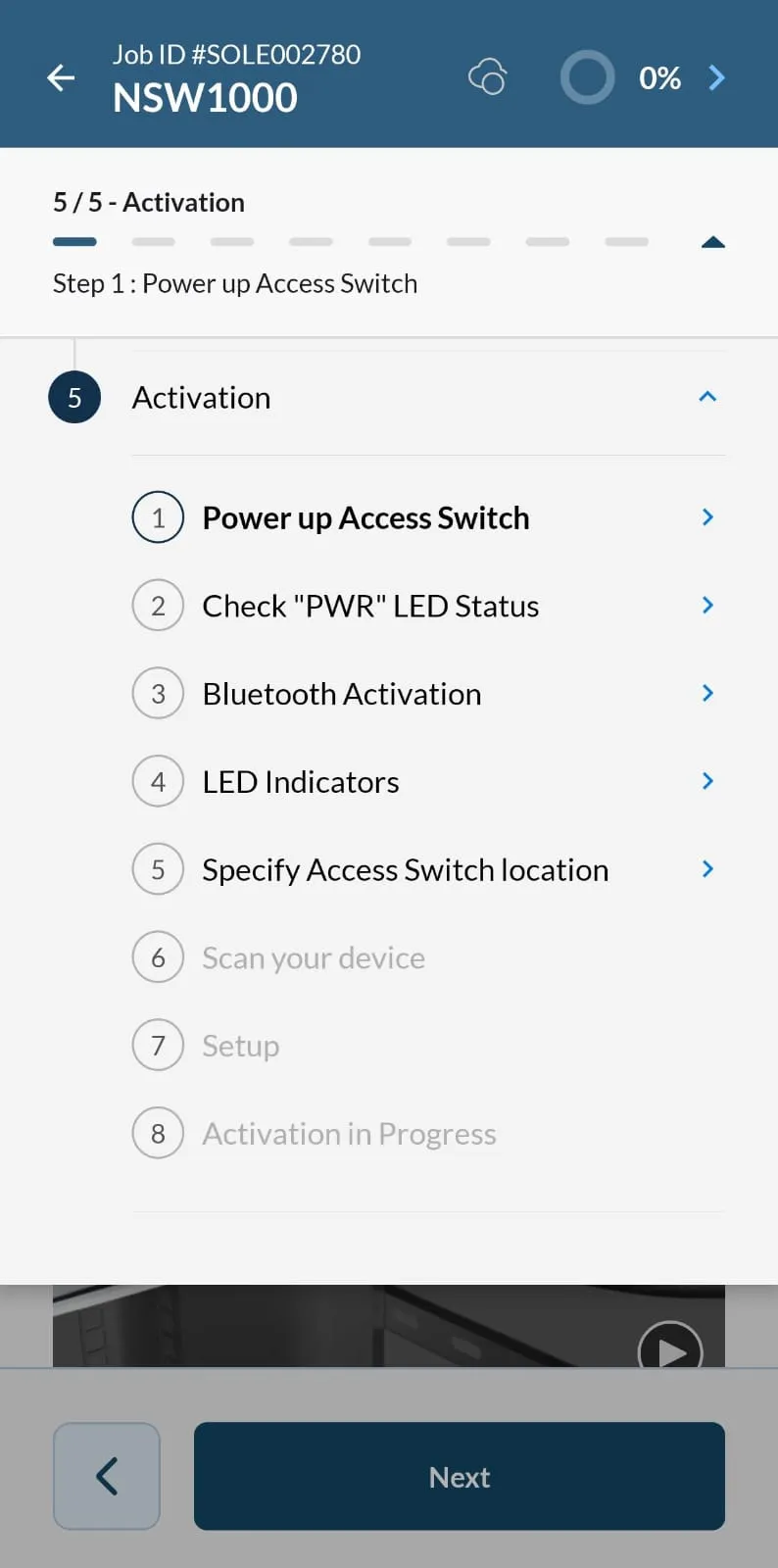
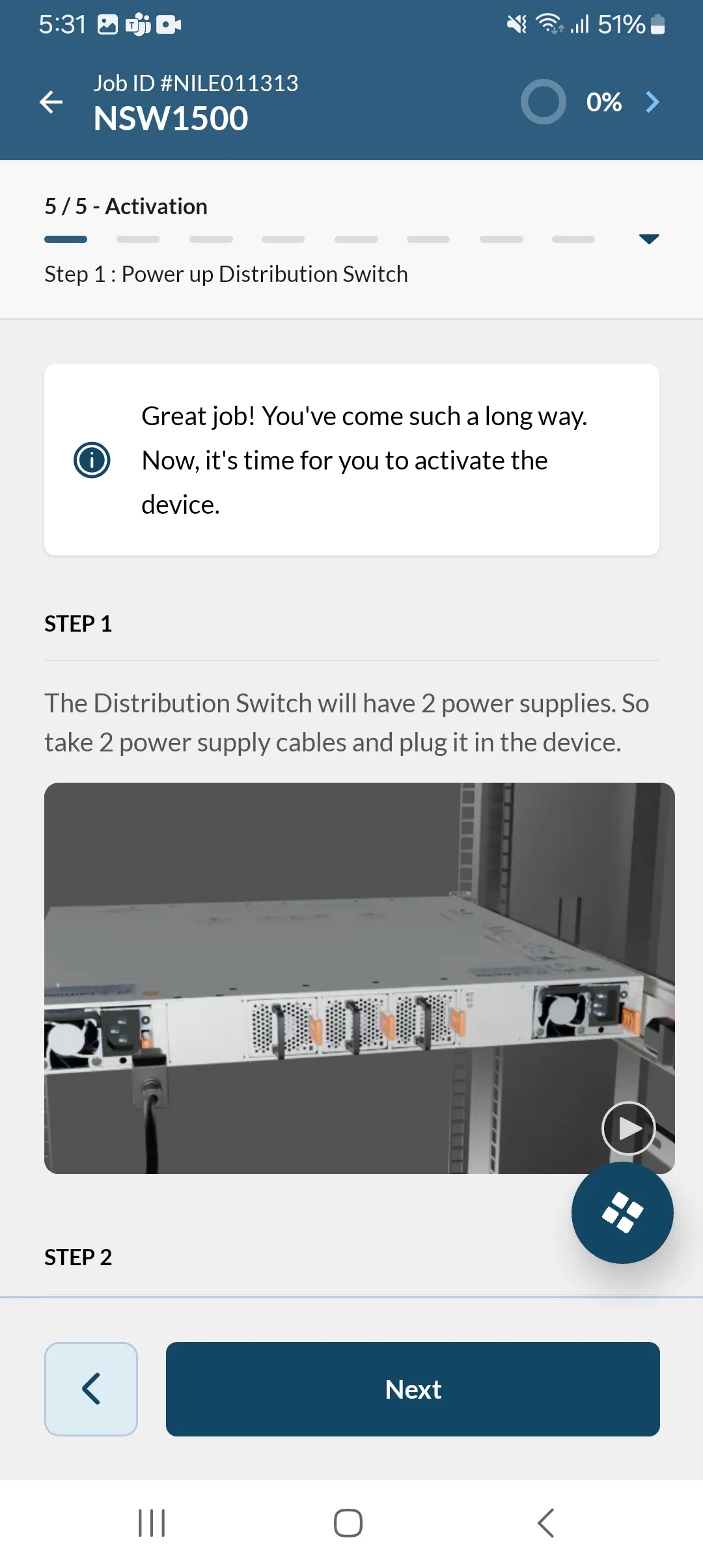
- Power on the device and connect each power supply to 2 different PDUs (Power Distribution Units). All the Nile elements have 2 Power Supplies for redundancy.
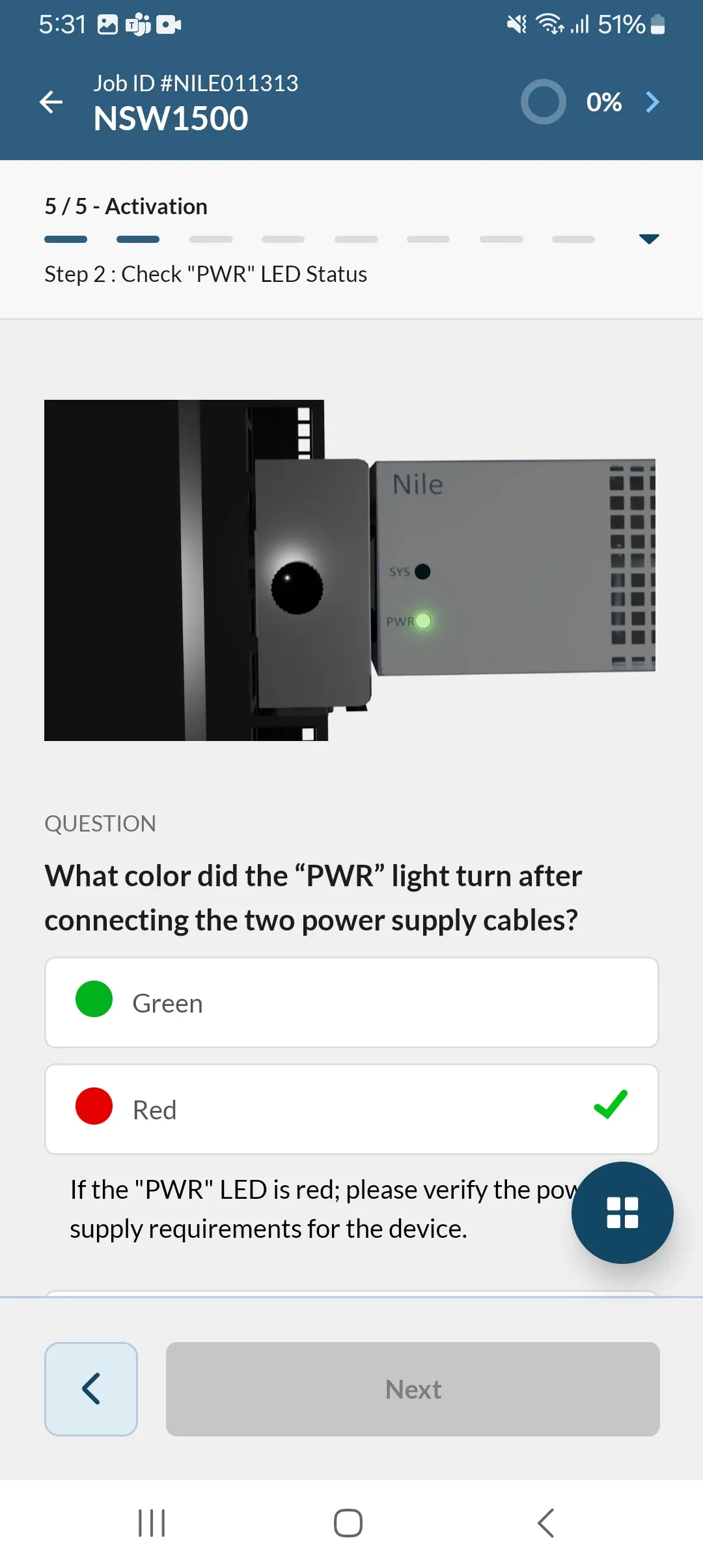
2. Check the "PWR" LED status: GREEN: Good to proceed with the next step. RED : Please verify the power supply requirements for the device. No color: Indicates no power
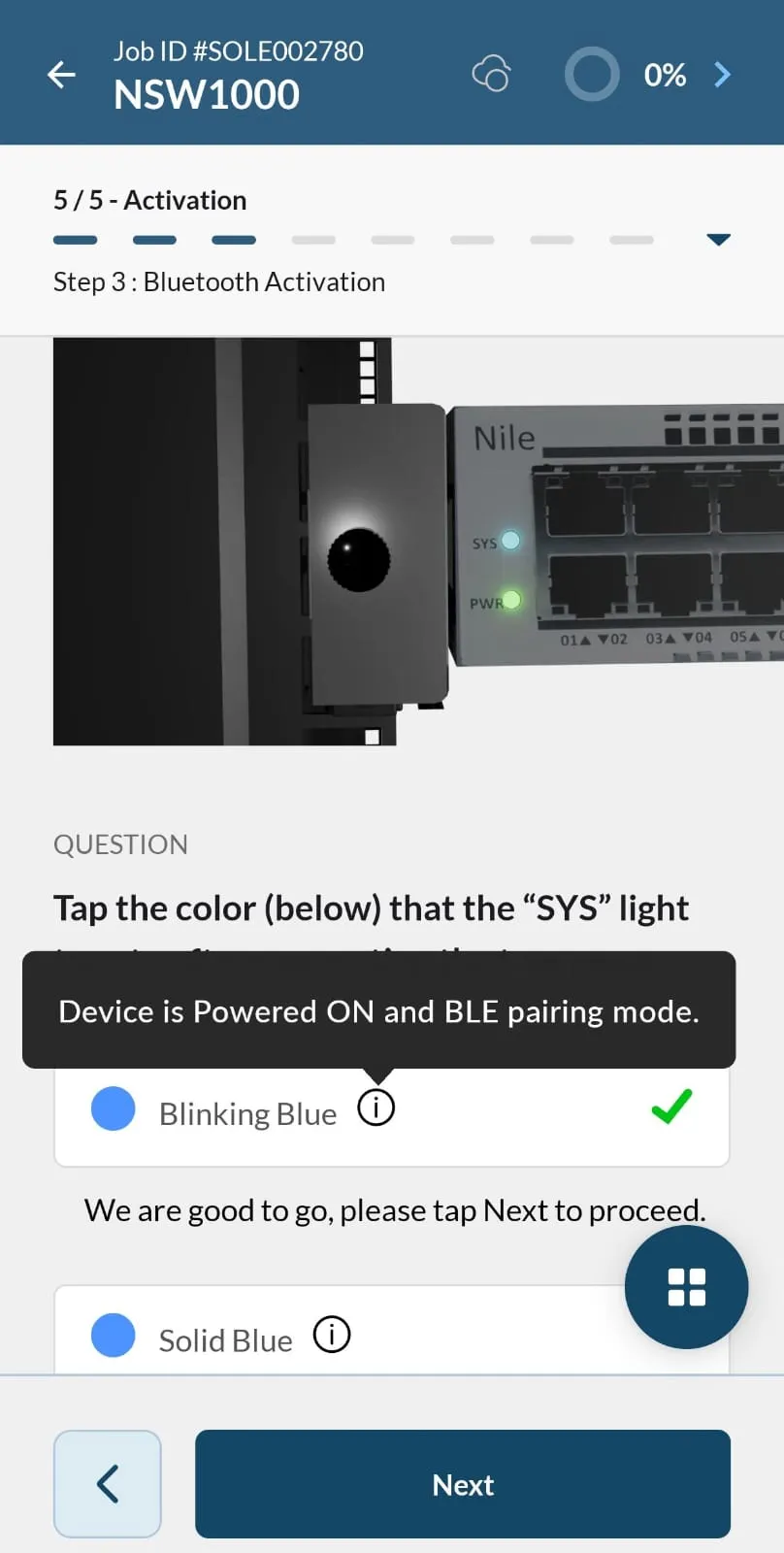
3. Bluetooth Activation: Wait until you see a flashing blue light on the “SYS” led status. This confirms that the Bluetooth is in pairing mode.
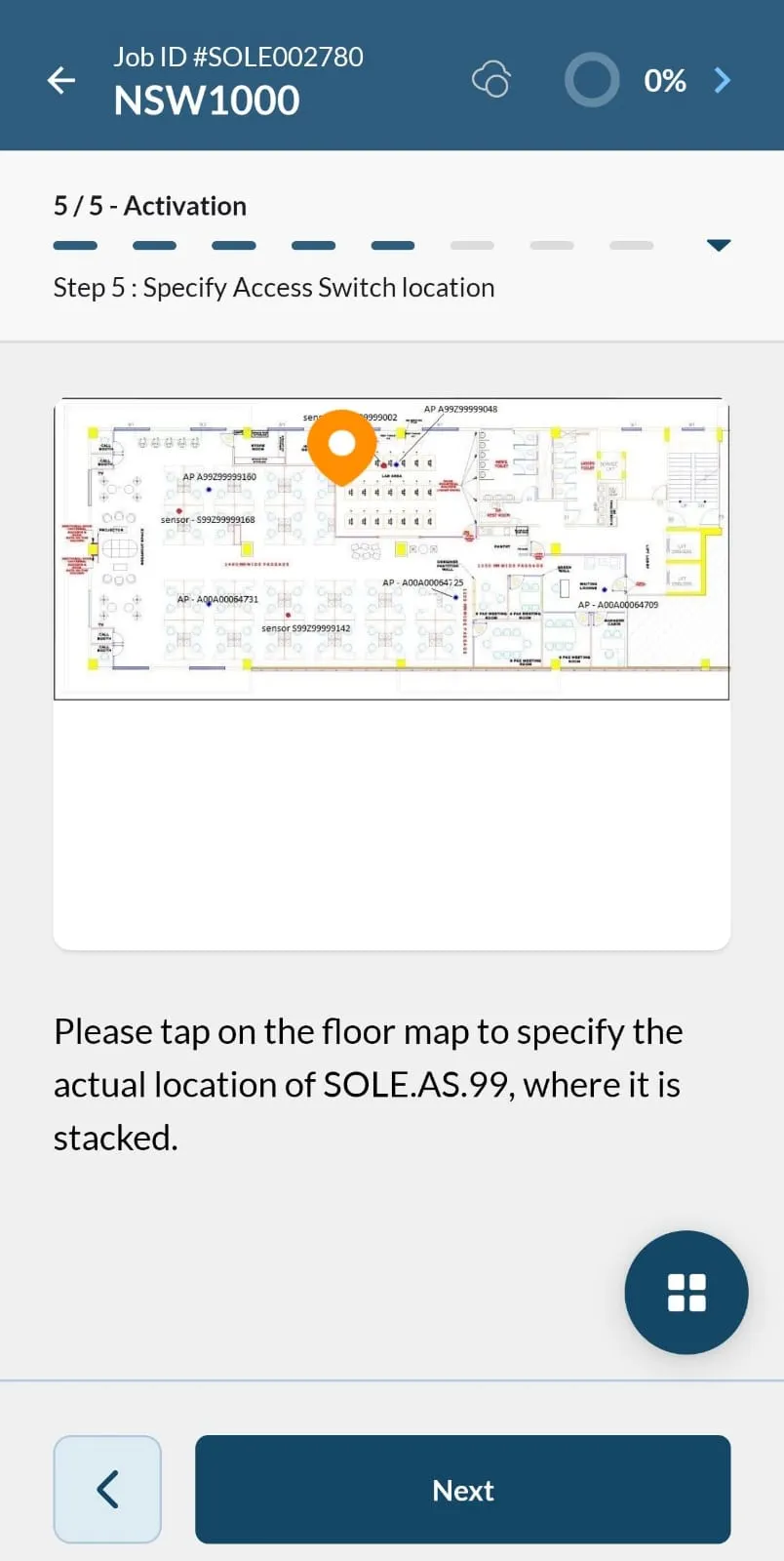
4. Specify the switch location on the floor plan.
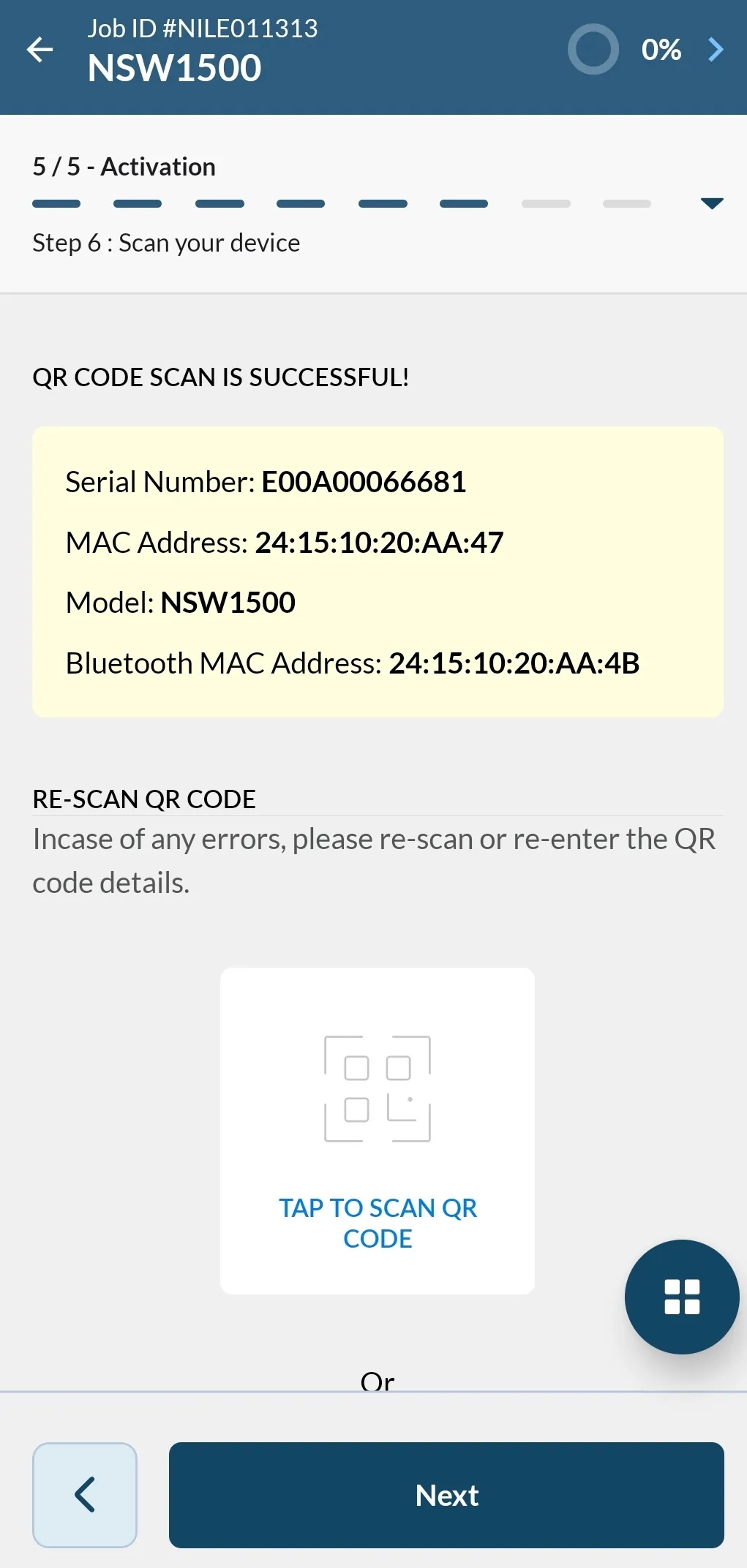
5. Scan your device. Ensure Bluetooth is enabled on the smartphone. Scan the QR code of the switch.
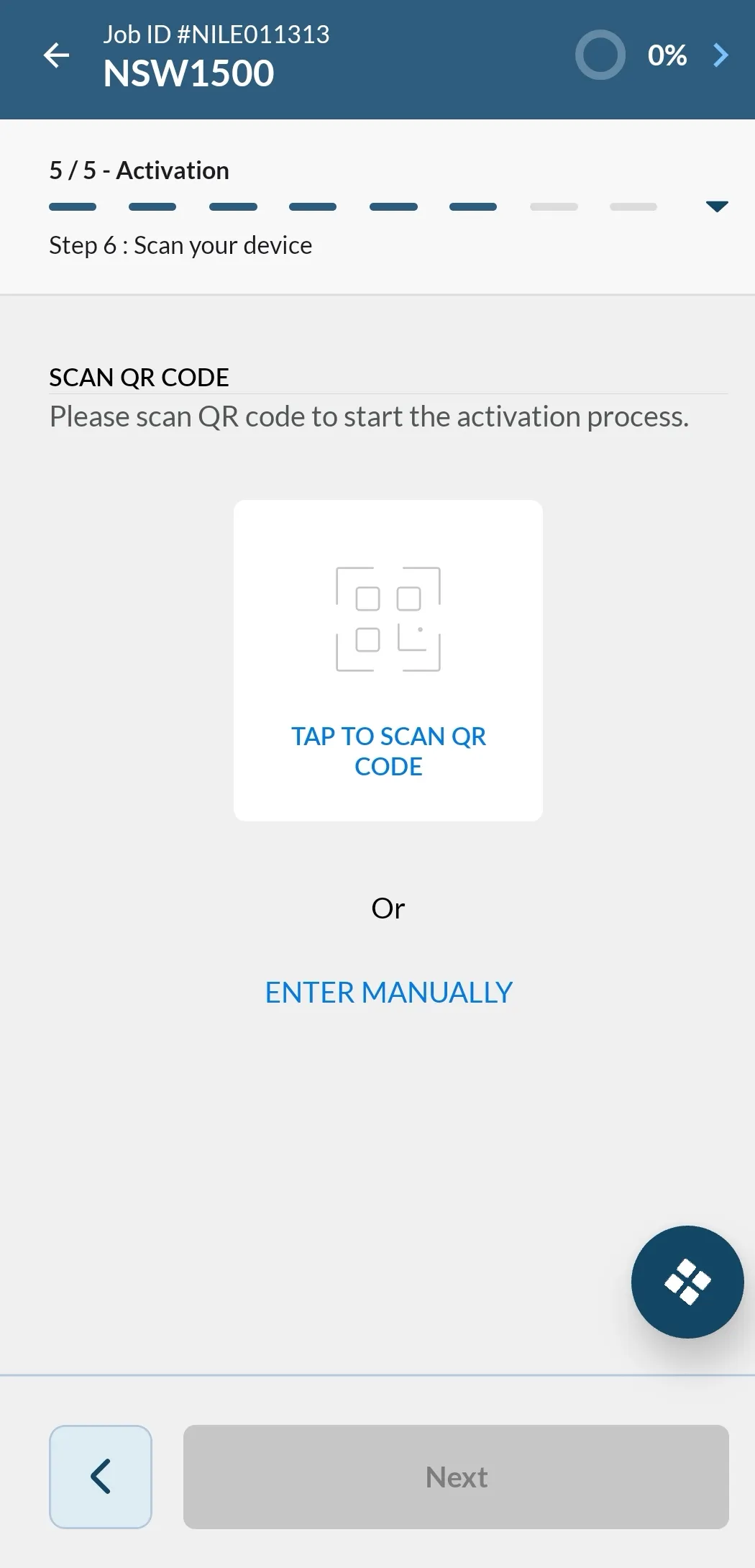
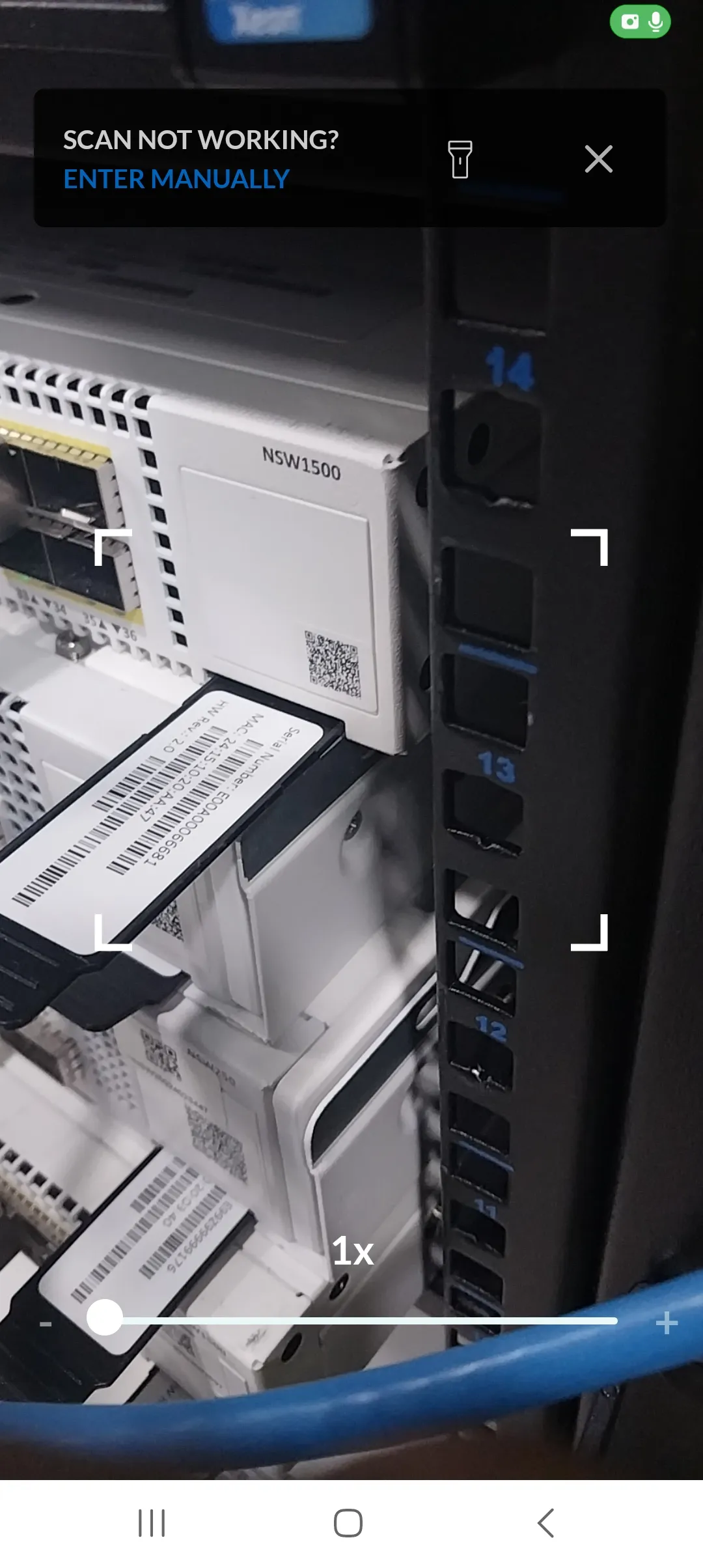
If you are unable to scan it, please click "Enter Manually" and follow the below instructions.
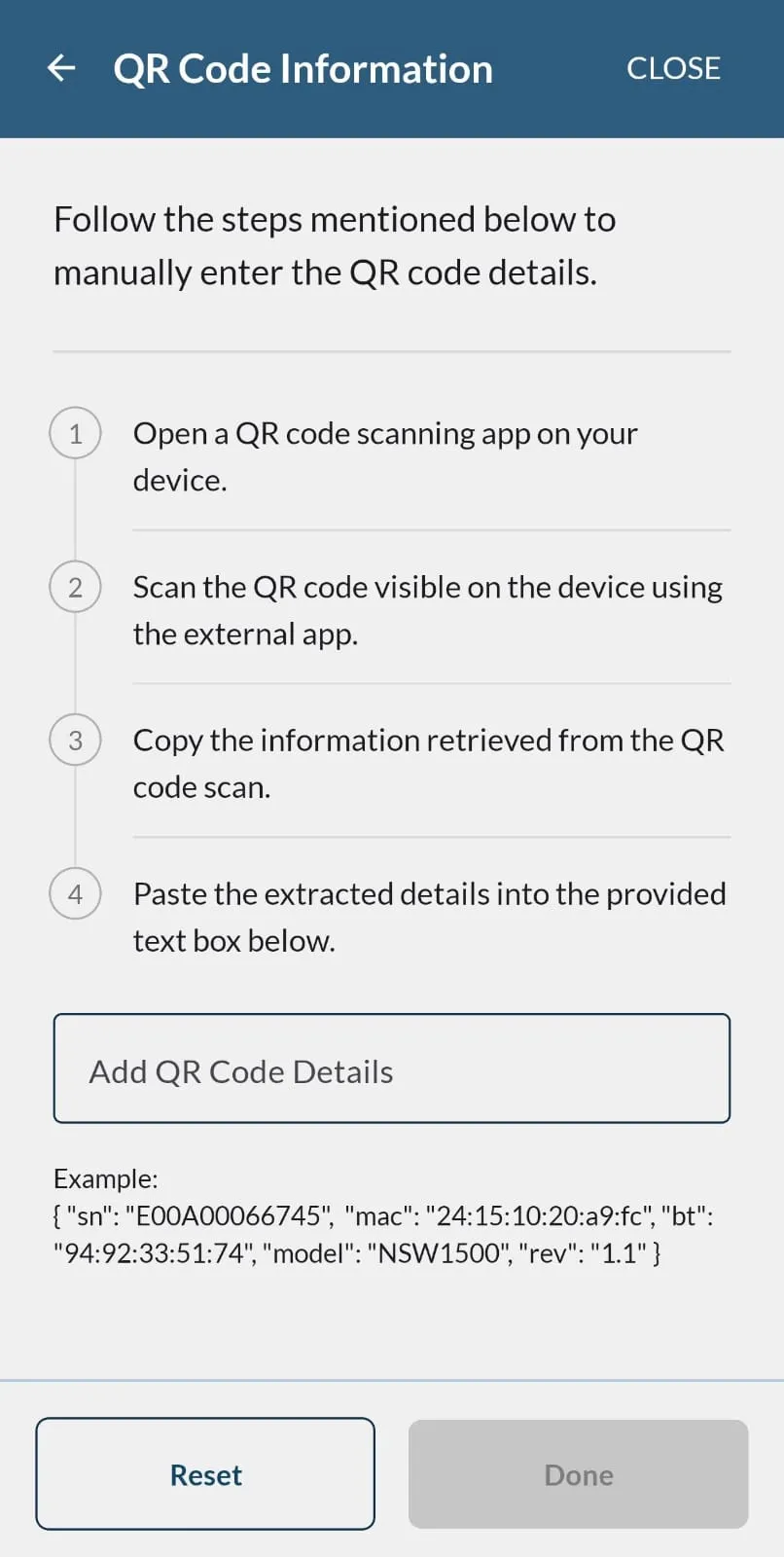
QR code scan successful
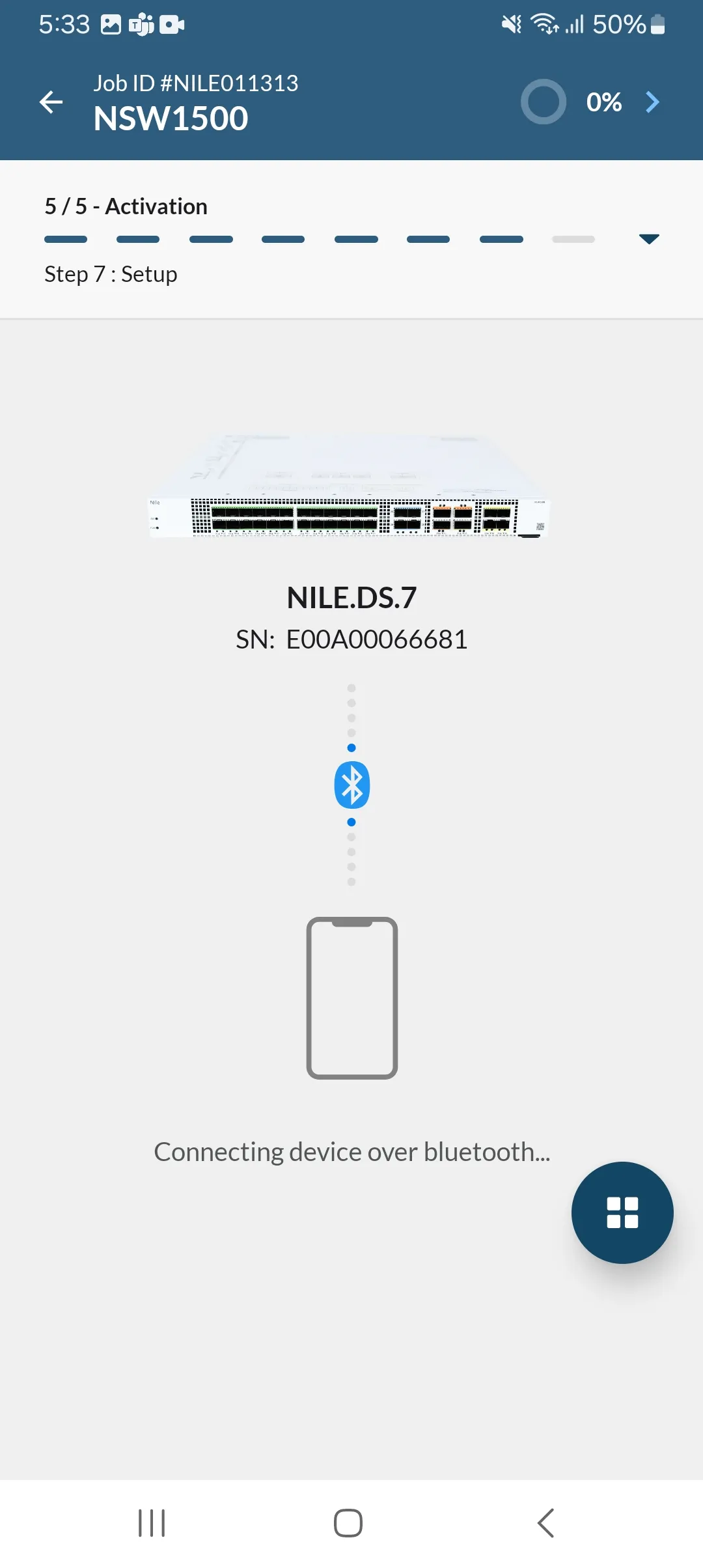
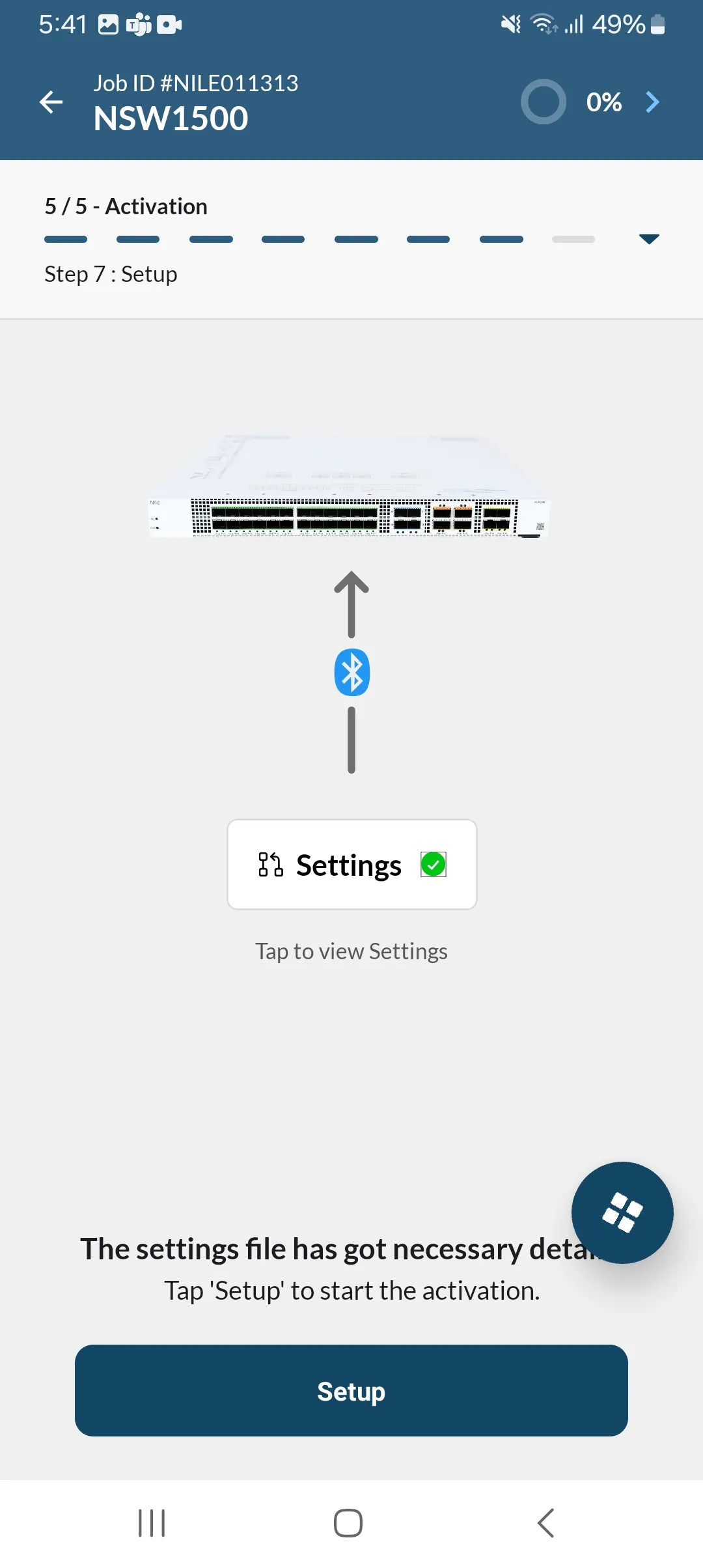
6. Setup: Connecting device over Bluetooth.
Bluetooth connected
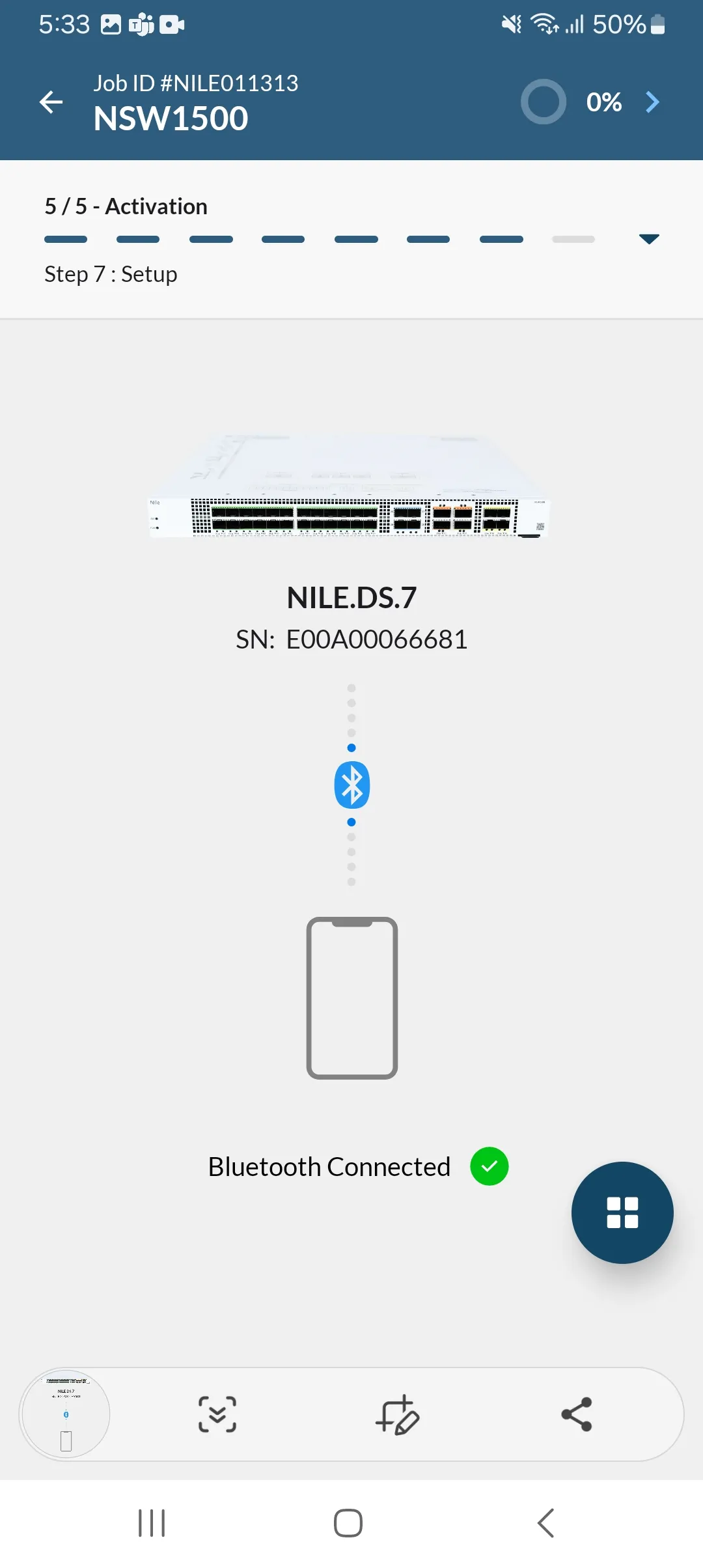
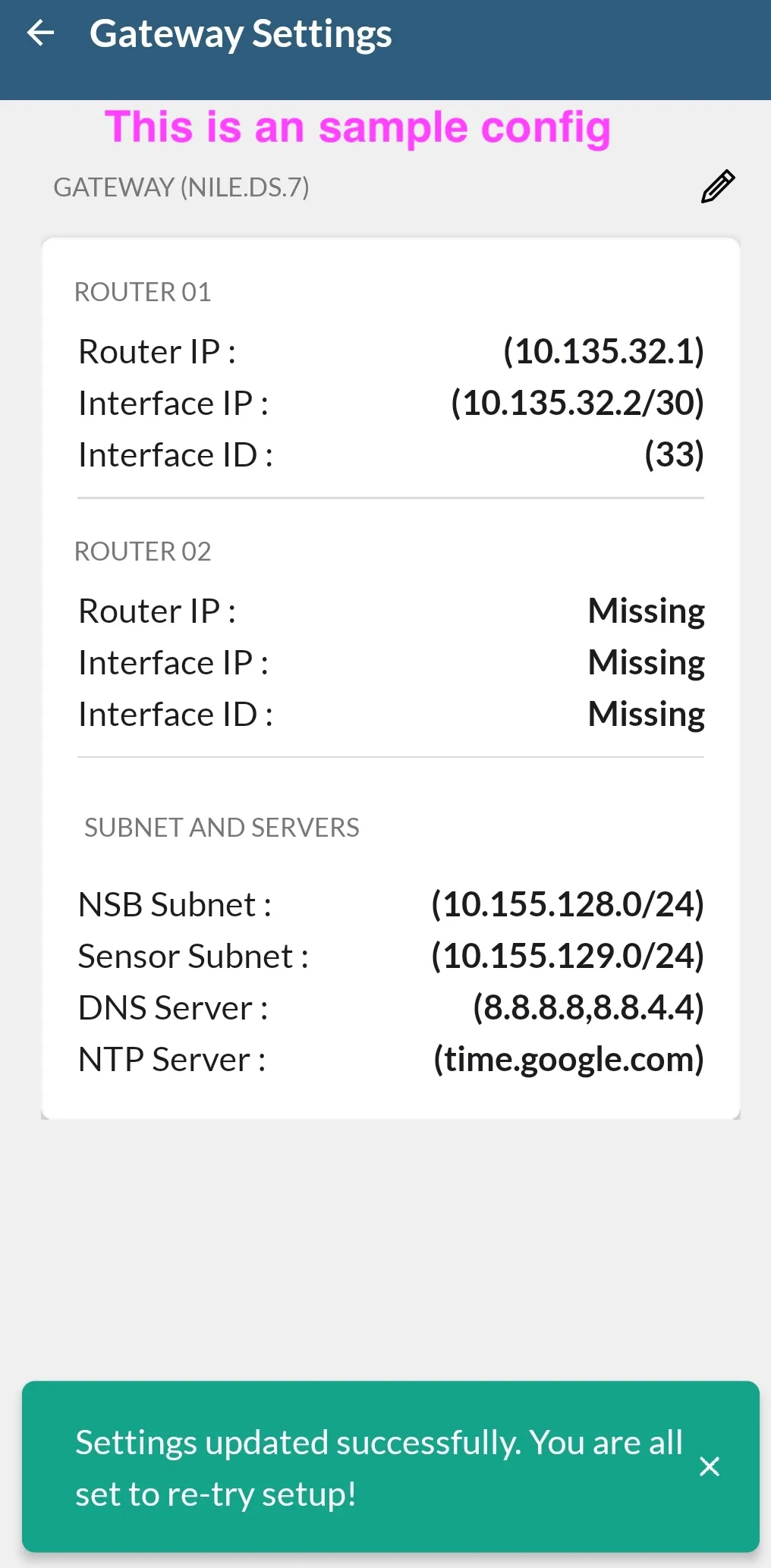
If the IP information is already available, Tap to view settings to verify the details if needed and then click Setup. At this time, the mobile app will try to connect to the BLE of the Nile device and push the settings to it. Please be patient at this time, you will need to wait at least 10-15 seconds.
If there is no IP information, please fill it in by clicking the pencil button with guidance from the customer.
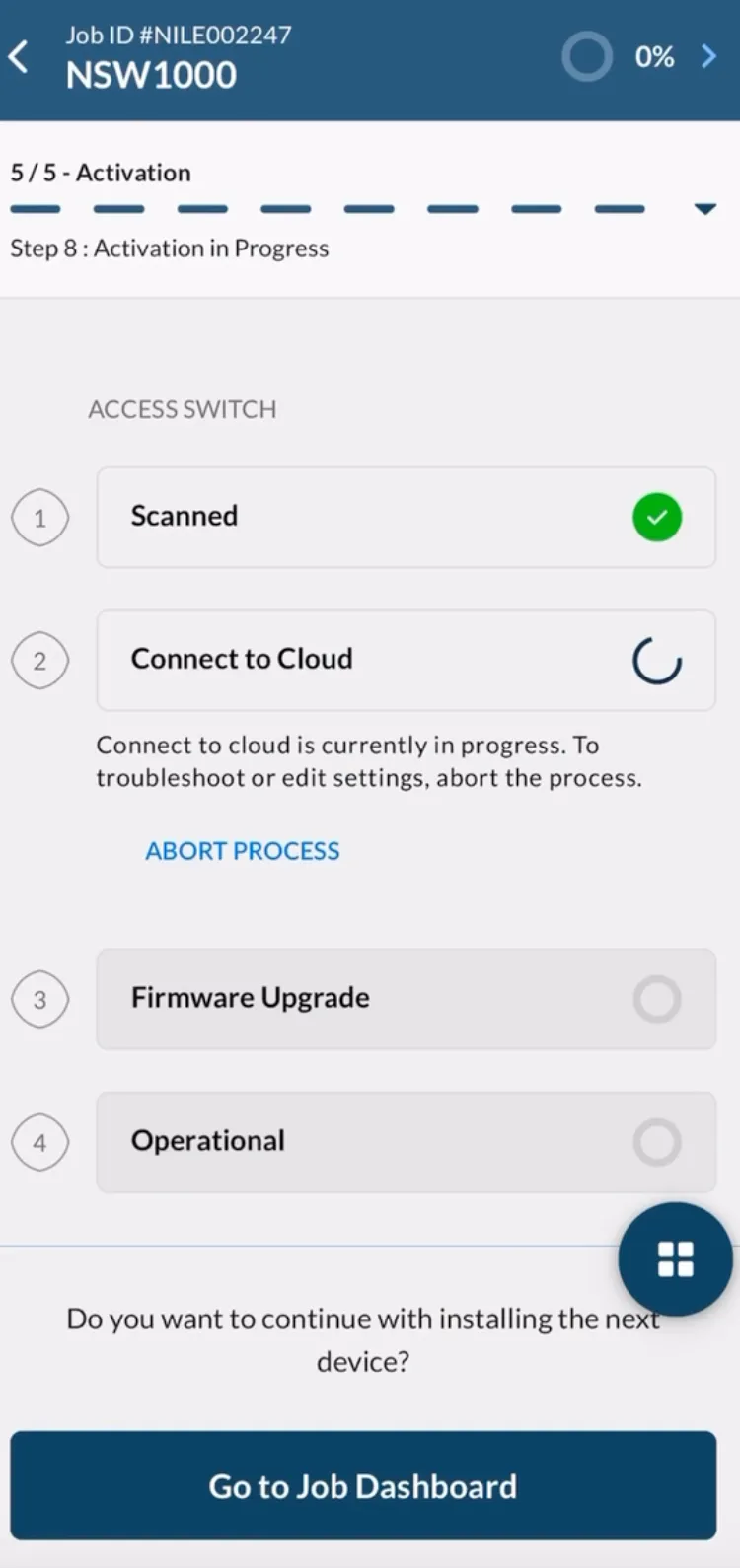
After pushing the settings, the device will connect to the cloud and undergo an upgrade after activation, so it might take a few minutes for it to come fully online. When the device has finished upgrading, you will see the "Operational" status and a solid green light on the "SYS" LED of the device.
Note: While the device is upgrading state, you may click on "Go to Job Dashboard" and continue to install the rest of the devices by following the same procedure.
Deactivation
Nile devices can be deactivated using the installation job in Nile Nav. Recommended order of deactivation from first to last is: Gateway (GW) or Distribution Switch (DS) -> Physical HeadEnd (if applicable) followed by Access Switch, Access Points and Physical Sensors. Note that virtual HeadEnds deactivates automatically with DS.
Please find below steps for deactivation:
- Assign a new or existing installation job to the technician for the building which has devices to be deactivated
- Technician can find the Jobs in the Assigned Jobs tab or In-porgess tab if job is already In-Progress
Start/Resume the job
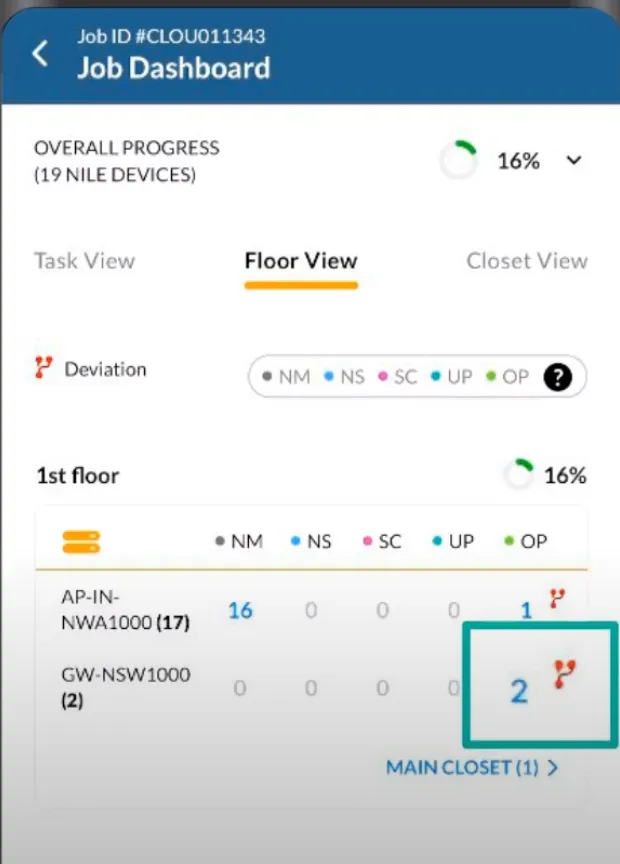
Navigate to Floor View. To Deactivate Operational (OP) devices, tap on the respective operational device as shown below
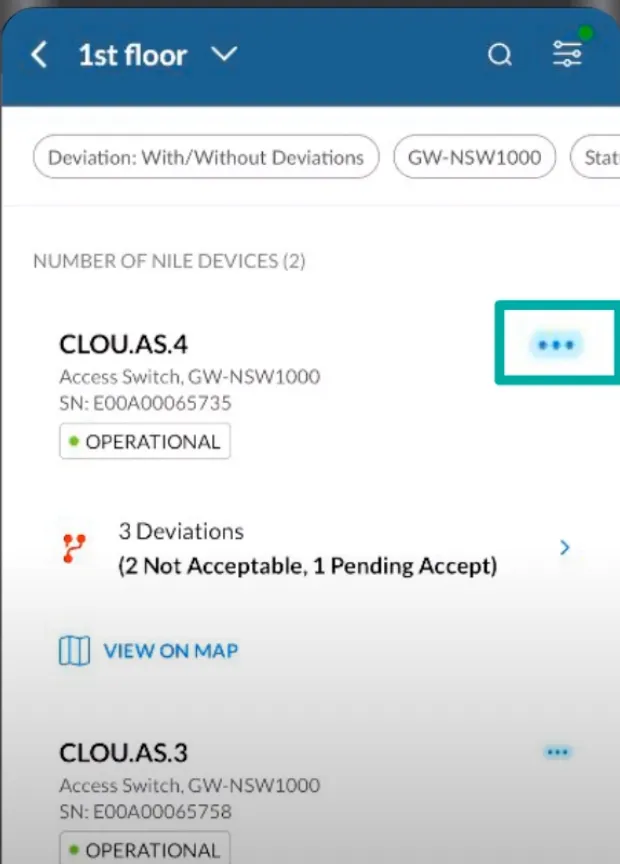
Click on three dots for the device you want to deactivate
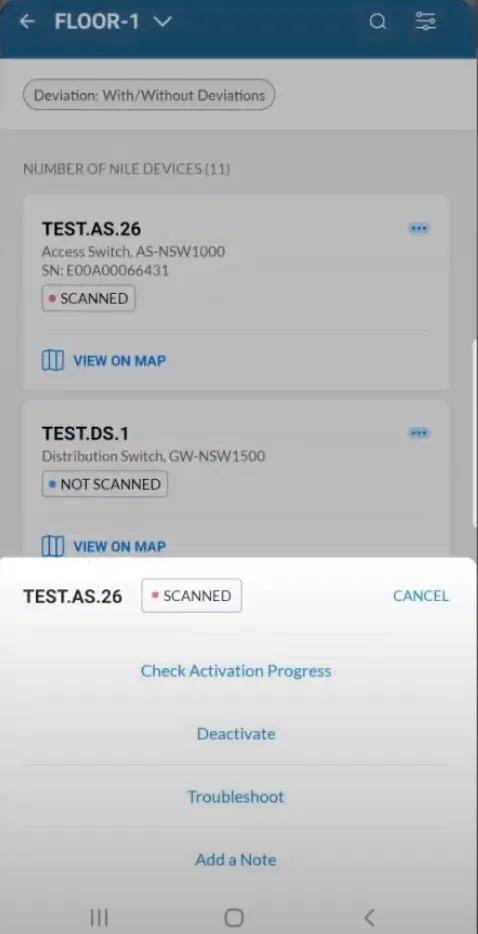
Select "Deactivate" Option from bottom sheet
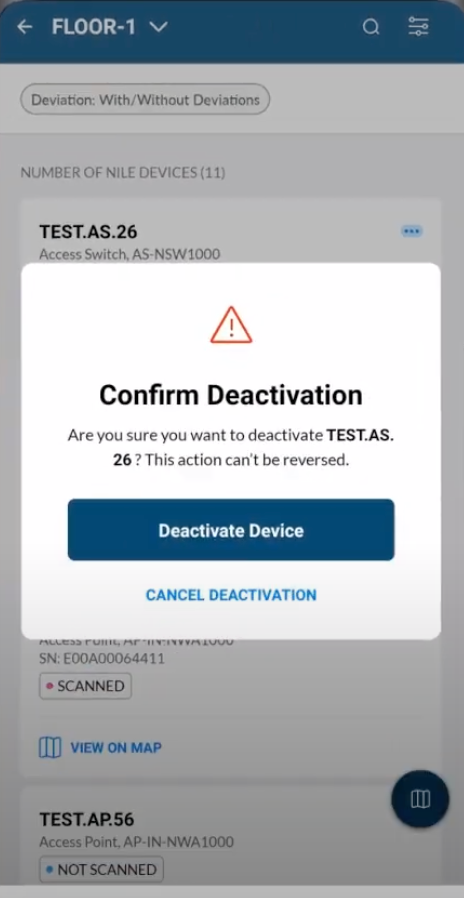
Confirm Deactivation
Scan the QR code on device or enter details manually and Tap Deactivate at the bottom of the screen
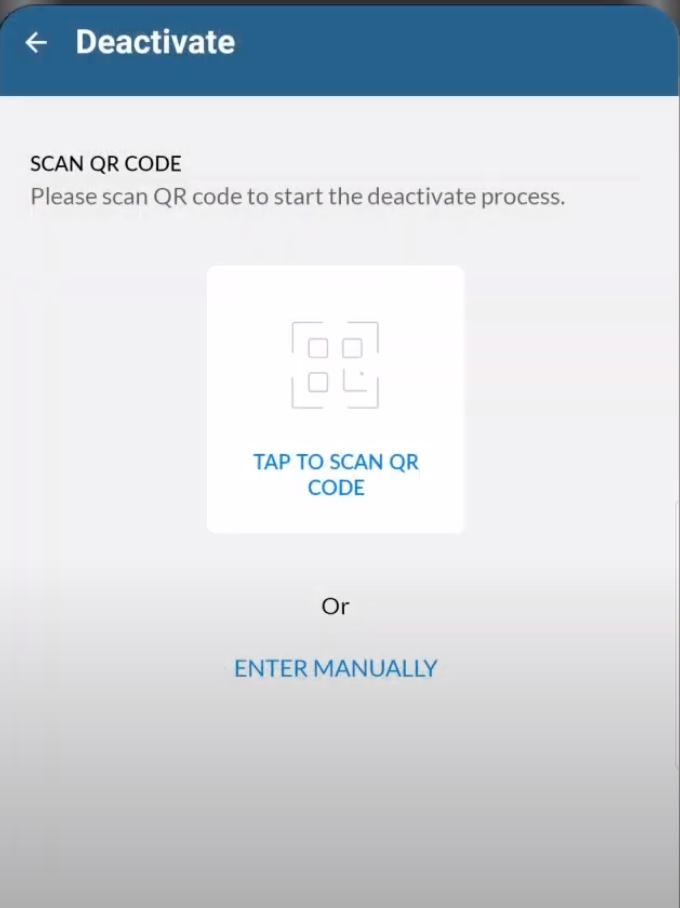
- With this you have your "Device Deactivated Successfully
Switch Installation & Activation
Physical Headend Installation & Activation
AP Installation & Activation